

Community Based Conservation in Action
Refuge Stewards projects are designed to care for protected lands while building inclusive pathways into environmental stewardship. Each project brings together refugees, immigrants, volunteers, and conservation partners to work collaboratively on land restoration and long term site care.
These projects recognize that effective conservation depends not only on technical practices, but also on strong relationships between people and place.
Stewardship as Shared Responsibility
At the heart of every Refuge Stewards project is the belief that land stewardship is a shared responsibility. Projects are developed in partnership with land trusts, public agencies, and community organizations to ensure that stewardship efforts align with ecological priorities and community needs.
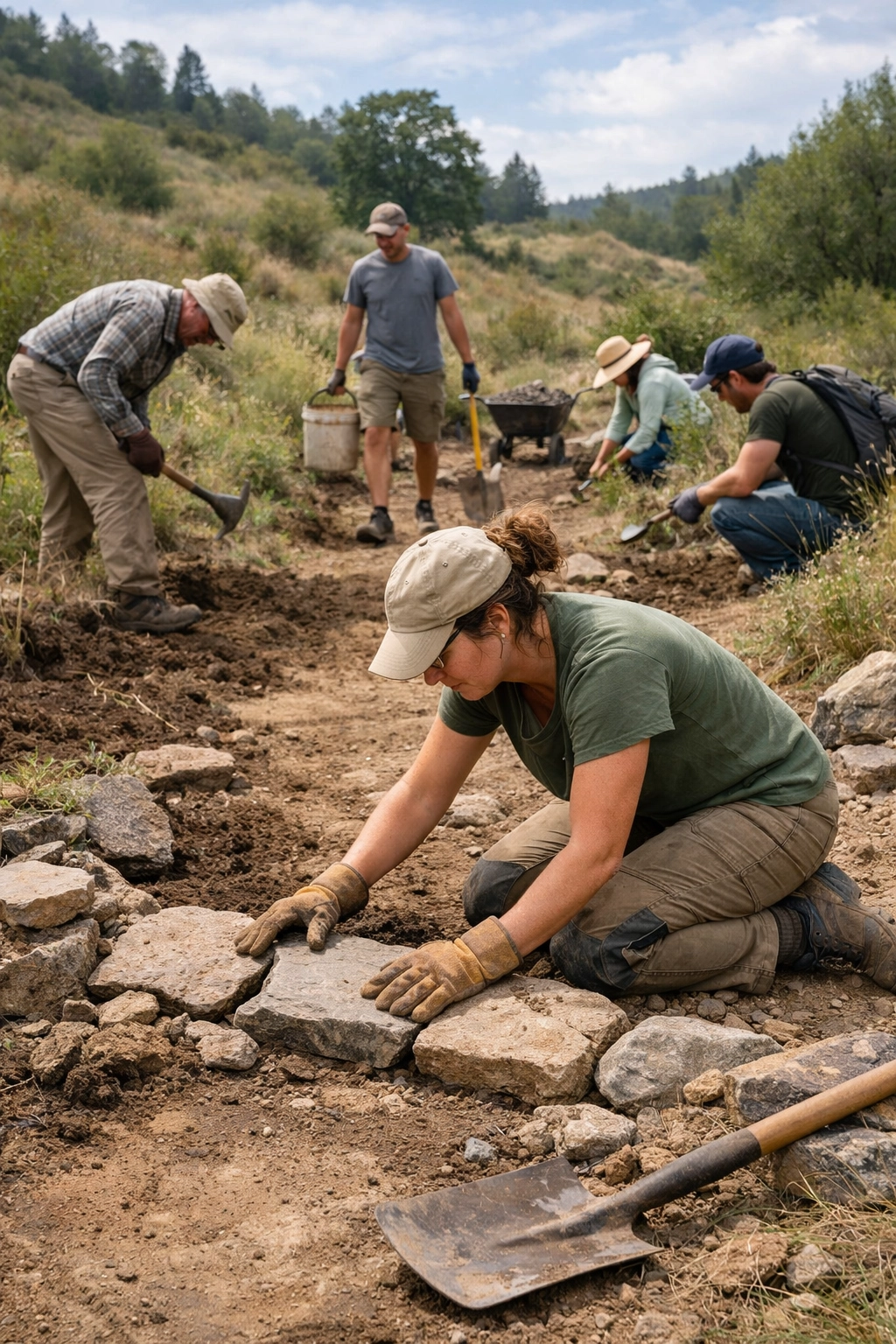
Participants engage in hands on activities such as habitat restoration, trail maintenance, invasive species removal, and ecological monitoring. These efforts support biodiversity, ecosystem health, and public access to protected lands.
Refugee and Immigrant Leadership
Refuge Stewards projects prioritize leadership development among refugees and immigrants. Through mentorship and hands on experience, participants gain skills and confidence to lead stewardship activities and coordinate with conservation partners.
Leadership roles may include project coordination, team facilitation, and communication with land managers. This approach helps ensure that conservation work reflects diverse perspectives and lived experience.
Types of Projects
Projects supported by Refuge Stewards vary by location and season, but all share a commitment to inclusive stewardship and ecological care. Typical projects may include:
- Habitat restoration in forests, wetlands, and riparian areas
- Trail building and maintenance to support safe public access
- Invasive species management and native plant restoration
- Site monitoring and long term land care planning
Each project is adapted to local conditions and guided by conservation best practices.
Learning Through Practice
Projects are structured as learning environments where participants gain practical knowledge about local ecosystems, land management techniques, and environmental challenges. Learning occurs through doing, observation, and shared reflection.
This hands on approach supports deeper understanding of conservation while building skills that can lead to future stewardship and employment opportunities.
Partnership and Collaboration
Strong partnerships are essential to the success of Refuge Stewards projects. By collaborating with land managers and conservation organizations, projects contribute to broader land protection goals while remaining community centered.
Partnerships are built on trust, communication, and shared commitment to inclusive conservation.
Long Term Stewardship
Rather than one time volunteer events, Refuge Stewards projects emphasize long term stewardship. Ongoing relationships with land and partners help ensure that restoration work is maintained and adapted over time.
This long term perspective supports ecological resilience and community investment in protected lands.
Measuring Impact
Impact is measured through both ecological outcomes and community development. Improved habitat conditions, maintained trails, and healthier ecosystems are paired with leadership growth, skill development, and strengthened community connections.
Together, these outcomes demonstrate the value of inclusive, community based conservation.
Looking Ahead
As Refuge Stewards continues to grow, projects will expand to support additional protected lands and community leaders. Future projects will continue to center refugee and immigrant leadership while responding to evolving conservation needs.
Through projects rooted in care, collaboration, and inclusion, Refuge Stewards contributes to a conservation movement that values people as integral to environmental health.